
Eyeshadow Color Guide

Color Theory 101: Eyeshadow
Color is something we are surrounded by every day, yet we rarely give a thought about it unless we have a specific reason. Yet the arrangement of books on a shelf, the combination of blossoms in a garden, or the cosmetics on someone’s face constantly draw our attention – subconsciously and consciously – and we judge whether or not we like the effect.
That is because the human brain is constantly processing shades and hues. Sometimes we are pleased, as with a subtle pastel palette at brunch. Sometimes we are less-than-pleased, as when an entire room is painted in screaming yellow.
Like everything else in life, there are better and worse ways to use color, and that’s especially true when it’s right on your face. Whether you’re looking to employ bright, bold, subtle, shimmery, or any other pigment type in your eyeshadow, it helps to learn the basics of color theory upfront to help you get it right.
The Color Wheel: A Centuries-Old Tool
All right, so just what is color theory? Basically, it’s the idea that colors work in a mathematical harmony according to what the human eye finds appealing. It is used in interior decoration, graphic design, and, yes, makeup.
Believe it or not, the ubiquitous color wheel was invented in 1704 by Sir Isaac Newton, a notorious introvert, nerd and brilliant scientist. Taking his cue from the rainbow, he set the colors around the spokes of a wheel using the classic ROYGBIV scheme.
Over the years, that wheel has been refined to include more colors, 12 or 18, or even a continuous fade all the way around the ring. Newer updates also include the idea of saturation or shades. Colors on the outside of the wheel are therefore lighter, while on the inside of the disk, approaching the center, they get mixed with more and more black.
Complementary Colors in a Nutshell
Naturally, this leads to a whole world of amazing colors to explore. With choice comes opportunity, but too much choice brings confusion. What pairs well with what? And with more than 16 million colors to choose from (and those are just the ones defined by digital hex codes), how on Earth is a person supposed to know?
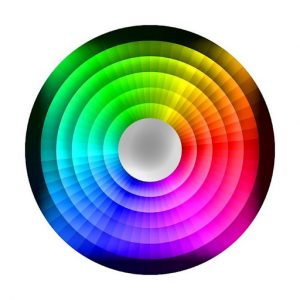 A good starting point is the concept of complementary colors, which are shades that sit on the opposite side of the color wheel. Colors such as yellow and purple pair well, as do blue and orange. Red and green is another famous complementary color combo, used in holiday celebrations and national flags across the world.
Not only do complementary colors look good together, but they blend to make one another appear more natural. Mixing a bit of yellow into purple, for instance, turns a too-bright shade into a natural lavender. Or the opposite, a bit of purple in yellow neutralizes it and makes it closer to the pigments you find in nature.
That works for your makeup as well. If you love purple but want to glam up your look, try putting gold on your inner eye or lower lid. Similarly, if you love copper, use blue to highlight your outer corners or line your eyes.
The Best Eye Shadow Color Combos
Even if your game stopped with complementary colors, it would be much improved. But it’s fun to spread out from there and try some other unique combos too. We recommend:
- Woodland greens and browns for an earthy effect, especially appealing on those with dark eyes
- Pink and blue for a bolder, yet still subtle, color scheme
- Black and silver to create that perfect sultry, chic look so popular on the red carpet
- Gold and bronze to create contrast without too much contrast
- Pink and yellow for a sunset look, perhaps with some orange mixed in if you really want to mimic the evening sky
As you get better at experimenting, you will come up with your own color combinations to try as well. Just remember: an artist is only as good as their canvas.
Creating the Perfect Base for your Eyeshadow
It’s worth noting that no matter how amazing your eyeshadow color schemes are, that’s not what people will notice if you don’t take care of your complexion. Think of eyeshadow like the cherry on a cake … it adds the perfect finishing touch, provided the cake itself has a lovely crumb and an even layer of creamy frosting.
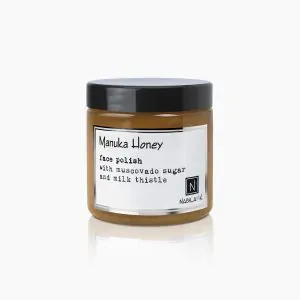 If eyeshadow is the cherry, your face is the cake and frosting. The truest beauty is health, after all, and there’s no better way to make the colors on your lids pop than to nourish your skin the way it deserves. That starts with a wholesome skincare routine based on the finest natural ingredients.
Think Manuka Honey Face Polish to gently exfoliate your face and buff away spent skin cells. With no artificial colorants or fragrances and the healing power of muscovado sugar and milk thistle in addition to real Manuka honey, you’ll reveal your most radiant skin yet. Or Manuka Honey Renewal Deep Hydration Face Oil, which balances pH levels to clear your complexion as it firms and hydrates.
The bottom line? Your eyeshadow game won’t get far if you don’t have a good base, so start there and add color as you go.